

If you’re wondering why you you shouldn’t eat dairy, here are the top reasons to avoid dairy and milk products altogether.
When I removed dairy from my diet and decided to go vegan instead, it made the biggest difference in how I felt. At twenty my joints hurt, and my knees, in particular, were so stiff some days that it hurt to sit and stand.
My digestion was sluggish, and my body felt ‘slow’. In my twenties. That’s pretty darn young to feel slow and uncomfortable.
When I got dairy out of my diet, I felt profoundly better.
It didn’t happen overnight for me, because some things were hard to ‘ditch’ (like cheese). As you will soon see, I later learned that was because of the highly addictive quality of cheese. But, once the dairy products were gone for good… my body felt renewed.
13 Reasons to Avoid Dairy and Milk Products
I talk about dairy far more than any other animal ‘food’. We consume so much of it without even realizing, and unlike meat products which we know we should reduce or eliminate… most of us truly believe that dairy is good for us. I want to change that.
I created these list of reasons to avoid dairy to show you that it’s more than just a personal preference. There are very concerning reasons that affect your overall health.
13. Dairy Alternatives
There have never been better dairy alternatives on the market.
I became vegan almost 20 years ago. Our alternatives for non-dairy milk were: bad-tasting soy milk and bad-tasting rice milk. That was it.
Vegan cheeses? Forget it! Vegan ice creams?
Uh, if you want to call a rice-based icy concoction with a weird oily aftertaste ‘ice cream’, I guess it counts – I just never ate it.
And, that was a big deal for this ice-cream-loving vegan!
Now?
You are spoiled, people! 😉 Have a look at just some of the dairy-free options available:
Milk: Coconut milk from So Delicious and Silk, almond milk from So Delicious and Almond Breeze, soy milk, rice milk, hemp milk, flax milk, oat milk, and blended milk like almond coconut.
Really—there isn’t ONE option in all of these that is at least as good as—or better than—cow milk?

Cheeses: Daiya shreds and Daiya wedges probably earn top spot here for commercial cheeses. But, there are many more recipes available too.
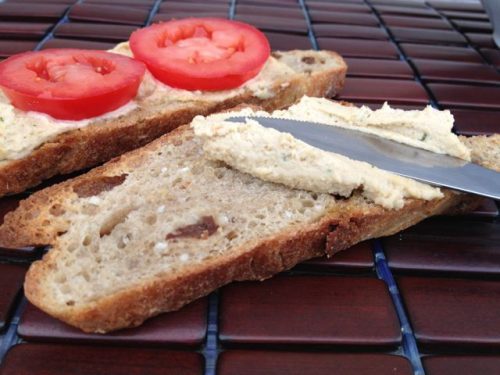
Try my two vegan parmesan alternatives, my ‘Truffled Cashew Cheese’ (pictured below, from LTEV, and recipe coming soon). And, have you seen Miyoko Schinner’s new Artisan Vegan Cheese cookbook? WOW!
Yogurts: Coconut yogurts and greek yogurts, Organic Soy, Almond.
Ice Creams: Oh, you guys are lucky! Coconut ice creams from Coconut Bliss (my FAVE!) and So Delicious, Rice ice creams by Good Karma, soy ice creams, and then many nut and seed based ice creams like almond creams, hemp, and cashew. Or, make your own with my “Dreena Dazs” recipes!
Seriously, I haven’t even exhausted all the brands and options here – we are lucky to have so many delicious options – no excuses.
12. Cancer Prevention
Prostate, breast, and ovarian cancers have been linked to dairy consumption. And, if you’ve read The China Study, you’re aware of the link between casein (the main protein in milk) and cancer. If not, READ it!
Dr. T. Colin Campbell, professor emeritus of nutritional biochemistry at Cornell University and author of The China Study, says casein is one of the most significant cancer promoters ever discovered.
Think about how often children are pushed to eat milk, yogurt, and cheese. Childhood diets rich in dairy products are associated with cancer in adulthood.
For more, watch this video from Dr. Colin Campbell.
11. Cheese is addictive
That’s why it’s so darn hard to stop eating the stuff. But, as you’ll learn in Julieanna’s brief video (and through this list), it’s best to kick the cheese (and dairy) habit.

10. Osteoporosis
Seems counterintuitive. We’re supposed to drink milk to protect against osteoporosis, right? So why do the countries that guzzle the most dairy have the highest osteoporosis rates? We now know that it’s not just calcium intake, but absorption and loss.
When we eat diets high in animal protein (milk included), our bodies become acidic and calcium is drawn from our bones to neutralize that acidic environment – cheese is particularly acidic.
Ditch the dairy (and the meat) to help maintain a more alkaline state in your body.
9. Plant-Based Calcium
Last year, the “Healthy Eating Plate” food guide pushed dairy off the plate, based on Harvard’s assessment that high intake can increase the risk of prostate cancer and possibly ovarian cancer, and also suggesting that foods like collards, bok choy, and baked beans are safer choices than dairy for obtaining calcium.
Speaking of calcium sources and absorption, did you know that kale contains more calcium per calorie than milk (90 grams per serving) and is also better absorbed by the body than dairy?
And that’s just ONE plant food you can eat. Other plant-foods boosting calcium include: beans, nuts like almonds and seeds like sesame, broccoli, collards, whole-grains, and tofu. (And if you think eating leafy greens is hard, I have a leafy-greens post coming up, stay tuned!)

8. Heart Disease
All that cheese and milk (and other dairy products) pack a wallop of cholesterol and saturated fat to one’s diet. A low-fat plant-based diet has been shown not only to prevent heart disease, but also reverse it.
And, before you think low-fat dairy is okay, it has been linked not only to increases in allergies, but also type 1 (childhood-onset) diabetes.
7. Constipation
Milk and cheese have no fiber. Neither does meat.
Dairy is constipating for children. Our children have never been constipated, yet I have heard parents talk about poo problems over and over.
And, grownups, if the kiddos get constipated from dairy, you will too (maybe you are right now).
There’s no need for laxatives. Eat a plant-based diet (rich in whole foods), and you’ll poop easy. There, I said it.
6. Milk Stinks
Okay, there is nothing scientifically or even ethically sound about this argument. But, have you ever just smelled milk? Put aside the fact that you’ve been drinking it since your wee years.
Take a glass and smell it. It has a stink.
I guarantee that if you grew up drinking almond or coconut milk and you tasted COW milk, you would immediately say “peeU”!
It is what we are conditioned to drink, and cow milk is – well – stinky… and, that’s even before it goes sour.
5. Antibiotics and Hormones
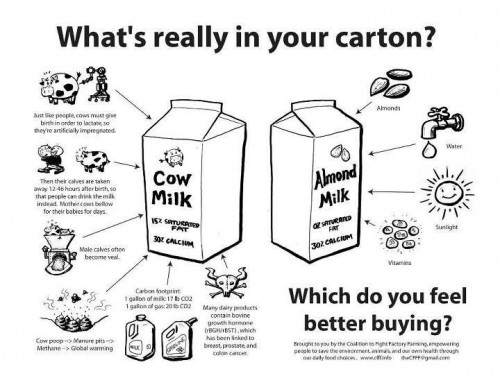
The mass production of milk requires cows being stressed to unnatural levels. This stress results in mastitis in the cows, which requires antibiotics, which make their way into the milk in our markets.
Do you want to drink growth hormones and antibiotics? Do you want your children to? You may bypass this one point by choosing organic milk products – but that doesn’t change the composition of milk…
4. Saturated Fats, Cholesterol, and Hormones
Skim milk is marketed for lower fat content, yet a 2011 Harvard study of 12,829 children showed that the milk sugar in skim milk may make you fatter than whole milk.
And, all milk products (as with ALL animal products) contain cholesterol. And, we have been sold the line that “organic” milk is the solution.
But as explained in The Complete Idiot’s Guide to Plant-Based Nutrition
“Just because you pay more for the ‘organic’ label doesn’t mean you’re getting a safe, toin-free product. Milk products are inundated with steroids and hormones (both naturally occurring and production-induced… and microbiological contaminants (think bacteria, viruses, parasites and mycotoxins) can also find their way into your dairy products.“
3. Animal cruelty
Dairy production might be the most offensive and heinous of all animal farming. Baby calves are pulled from their mothers at birth. Mother cows will bellow and search after being separated from their young. While female calves are slaughtered or kept alive to produce milk, male calves are taken, chained in tiny stalls and raised for veal.
And, since is unprofitable to keep dairy cows alive once their milk production declines, they are usually killed at 5 to 6 years of age (though their normal life span exceeds 20).
2. Lactose Intolerance
I would guess that if any of us were tested, we would be deemed ‘lactose intolerant. It is estimated that about 75 percent of the world’s population are ‘lactose intolerant’, and those that aren’t (primarily Caucasians) tolerate milk sugar because of an inherited genetic mutation. That’s because the milk is meant for cows, not people…
1. Dairy Products Come from Cows
Why are we all drinking milk from a cow when we wouldn’t drink the milk from our lactating dog or cat… or milk from a horse, pig, or raccoon?!
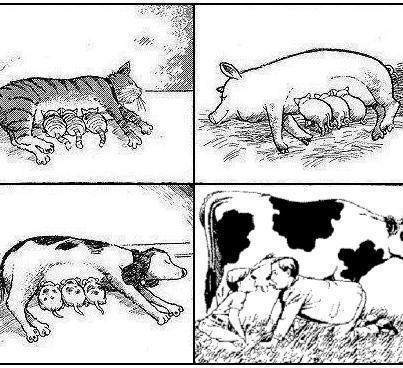
We are the ONLY species that drinks the milk of another species, consuming it long after weaning. Would you go out into a field and suckle from a cow?! I don’t think so. Think about that connection. Just think about it.
As you can see, there are many health reasons to avoid dairy. I know it’s not easy to make a lifestyle change like this but I promise you that it’s worth it!
Have you already given up dairy? If so, what have you noticed? What were your reasons to avoid dairy?

Stacy says
Well I have a 4 week old who is strictly breastfeeding, lots of crying before bed and excessive pooping along with a terrible bum rash. I cut out the majority of dairy (it isn’t easy!) and all those symptoms are gone. I can’t wait to see the long term effects in me.
aj says
Interesting read but there is obvious bias I can understand the cheese being acidic but not regular milk itself. We could argue just about all food except alkali food to be acidic because it is broken down via acid in the stomach. I also would like to know thatif the cancer study was done on purely Caucasian subjects. If they are lactose tolerant shouldn’t they acquire a resistance to the cancer. Does bgh break down when it enters the stomach or do I have to inject it t ok have it in my system. A trace amount get through. Igf is also linked to hgh does that mean we get cancer from that?
Rachael says
That’s not correct about all foods being acidic if broken down by our stomach acid. Some foods, lile lemon which are acidic on the outside actually become alkaline whem broken down by the body.
Dreena says
Yes, lemon is acidic but has an alkaline effect in our body. Milk has an acidic effect.
Stephanie says
I have been considering ditching dairy so I’m so glad I came across this site! I will say my good byes to ice cream and cheese until Monday when I start my new dairy free life! I will be sure to keep a list of notable changes to post. I give my daughter almond milk and organic cows milk but I’m going only to almond milk starting tomorrow. Hopefully her egzyma clears up!
Kevin says
It’s annoying how all these restaurants sneak in all these dairy ingredients without us even knowing! When I go out to eat, it’s usually at an Asian eatery. No wonder why they have such flawless skin.
Laura Jones says
I have not read this yet but I saw the “addictive quality of cheese” part.
I am vegetarian but I will just never give up cheese. But I am trying to lose weight from my belly at the moment and I am wondering why oh why I can’t. I think I know the cause now: milk! (I drink semi-skimmed)
I glug it down after eating and if I feel thirsty because it has this ice cold, fresh, tasty sweet flavour! As a kid right up until I left home at 18 I would pack away most of the household milk and get reprimanded for it. from 18 to about 28 I had absolutely no milk whatsoever, I just didn’t buy it, I wanted to lessen my effect on the dairy industry. I didn’t even miss it. I gave up tea (which I was addicted to at home!) and just lived on water.
But now I live with someone else who has milk and we buy about three 4 pinters a week and I’m back on the glugging! And I get told off for using all the milk again.
I realised how bad I was last night when I was alone in the house, replaced the milk for the other half for when he came home and I polished off that 4 pint carton to myself!!
I really want to give it up but it’s so difficult when it’s in my bloody fridge! And he won’t give it up because he needs his cups of tea. I need to be stronger-willed though because I can’t stand this belly flab on my otherwise fabulous figure.